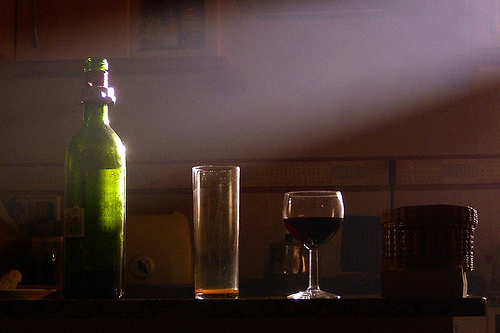
While reading “6 Things More Expensive Because of Marketing” published on bargainerring.com, I find about a study developed by Antonio Rangel of California Institute of Technology. Dr. Rangel and his colleagues found that if people are told a wine is expensive while they are drinking it, they think it tastes nicer than a cheap one, rather than merely saying that they do. Here is a brief explanation of their study as published by the Economist:
Dr Rangel gave his volunteers sips of what he said were five different wines made from cabernet sauvignon grapes, priced at between $5 and $90 a bottle. He told each of them the price of the wine in question as he did so. Except, of course, that he was fibbing. He actually used only three wines. He served up two of them twice at different prices. What is truth?
The scanner showed that the activity of the medial orbitofrontal cortices of the volunteers increased in line with the stated price of the wine. For example, when one of the wines was said to cost $10 a bottle it was rated less than half as good as when people were told it cost $90 a bottle, its true retail price. Moreover, when the team carried out a follow-up blind tasting without price information they got different results. The volunteers reported differences between the three “real” wines but not between the same wines when served twice.
HITTING THE SPOT: People do not just say they enjoy expensive things more than cheap ones. They actually do enjoy them more – Economist / Jan.17 2008
The article on bargaineering.com also talks about why we pay more for bottled water, enhanced water, coffee, diamonds and so on.
One of our favourite wines months costs 4.95€ and it’s fine. (It is from Toro region.) Still, the idea of paying 100€ and thinking that this is a “great” wine horrorises me…
In fact, some should make a similar study, for instance, in Turkey. I think for the prices they are paying for a bottle of wine, turkish wine drinkers should be just so happy and satisfied- as a bottle of red wine costs like 5-15 times more than it should cost in Spain or Italy. (Prices are this high on this land where since thousands of years people produce and drink wine because of stupid government tax policies on producers and merchants!)
Other related books and resources: